
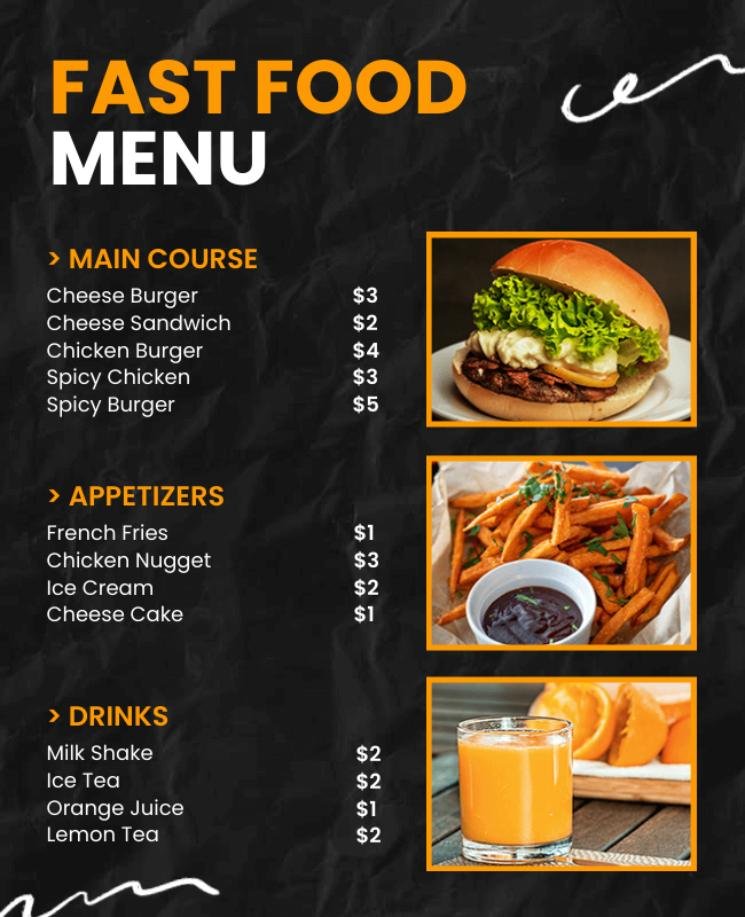
The fast food menu is designed using psychology to influence how customers think and choose. Restaurants carefully plan the layout, colors, and wording so people feel comfortable, hungry, and confident about ordering.
One of the strongest psychological tools is color. Bright colors like red and yellow are often used on fast food menus because they grab attention and stimulate appetite. These colors help create a sense of urgency, encouraging customers to make quick decisions.
Another psychological technique is “menu engineering.” This involves placing popular and profitable items in the most visible areas of the menu. When customers look at the menu, their eyes naturally go to the center or top. By placing key items there, restaurants increase the chance they will be ordered.
Descriptions also affect how people feel about food. When a fast food menu describes a meal as “crispy,” “golden,” or “made fresh,” it makes the item sound more delicious. Even if two items are similar, the one with better wording often sells more.
Pricing strategies are also psychological. Many menus avoid using currency symbols or round numbers because they make prices seem smaller. A meal priced at 9.99 may feel more affordable than one priced at 10.00, even though the difference is tiny.
All of these techniques work together to make ordering simple and enjoyable. The fast food menu is not just about food—it is about guiding customers toward satisfying and profitable choices.